
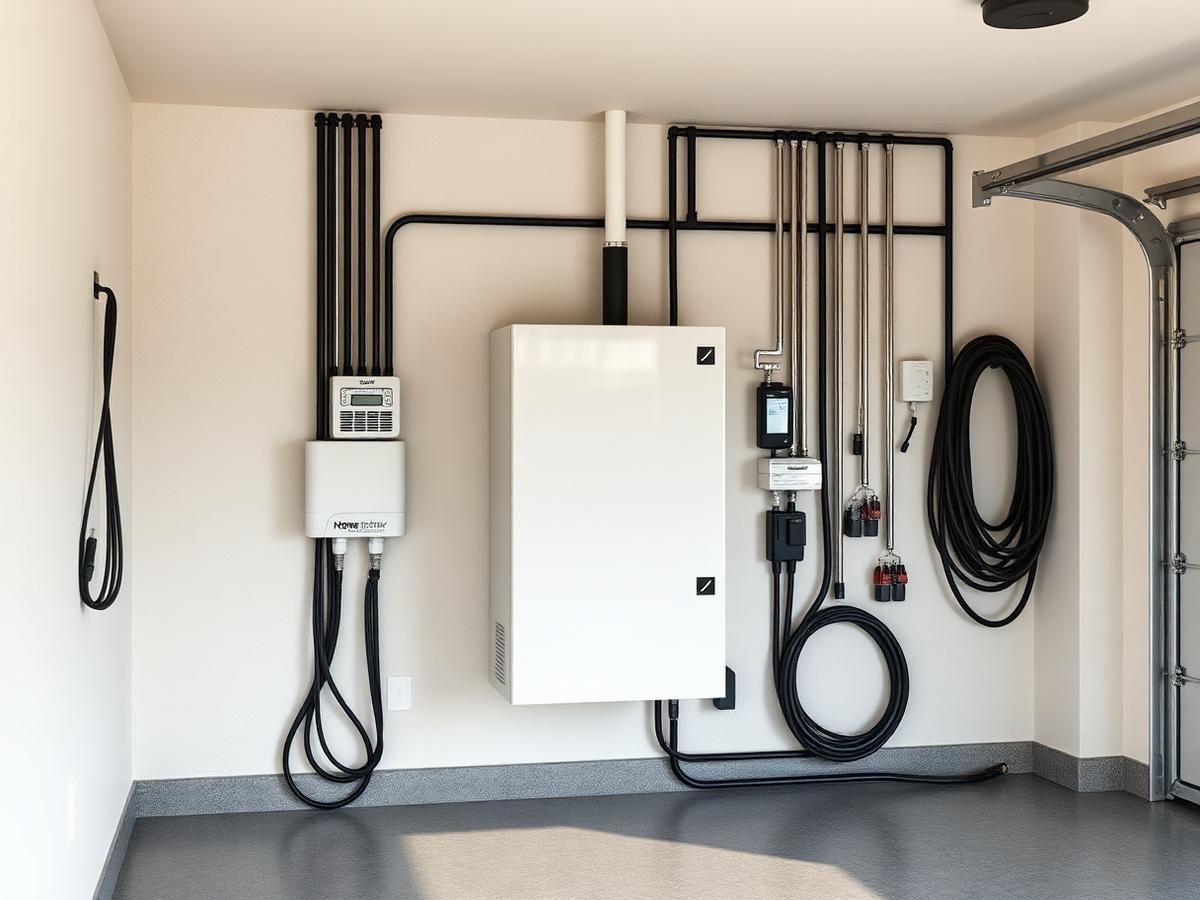
Storage planned as part of the whole home
Capacity, power, controls, clearances and cable routes are considered together.
DC coupling can coordinate a new system
A hybrid inverter can manage panels and a compatible battery on the DC side before electricity is supplied to the home. This can reduce conversion stages for stored solar and keep controls within one system.
Compatibility is important: battery choices may be tied to the inverter platform, and the whole design should account for array voltage, battery power and backup features.
AC coupling can simplify some retrofits
An AC-coupled battery has its own inverter and can often be added without replacing a functioning solar inverter. The trade-off is an additional conversion stage when solar electricity is stored and later used.
Metering and controls still need to coordinate correctly with the existing array, export limits and other large loads.
Choose from the property and objective
A useful comparison includes usable capacity, charge and discharge power, efficiency, warranty conditions, monitoring, backup operation, equipment locations and what happens if the system is expanded later.
Common questions
- Does adding a battery mean replacing my solar inverter?
- Not always. An AC-coupled battery may work alongside the existing inverter, while other designs may justify a replacement. Compatibility must be checked.
- Which type is best for backup power?
- Backup depends on the specific equipment and changeover design, not coupling type alone. Ask exactly which circuits and loads the proposal supports during an outage.