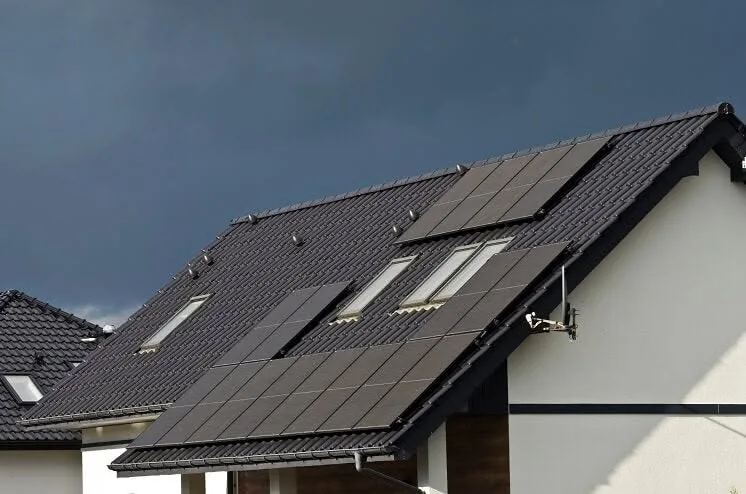
A design should fit the roof—not fight it
Usable roof area, shading, rooflights and safe access all shape the final layout.
Daylight matters more than temperature
Solar photovoltaic panels convert light into electricity, so they continue generating on cloudy days. Output is lower when light levels are lower, and it varies strongly between summer and winter. A credible design therefore uses location-specific annual modelling rather than treating a bright summer day as typical.
Cool operating conditions do not prevent generation. Roof orientation, pitch, shading and usable area normally matter more to the design than Glasgow's air temperature. Chimneys, neighbouring buildings and mature trees can create losses that a broad postcode estimate will miss.
The roof and consumption profile decide the value
South-facing roofs are often productive, but east-west layouts can spread generation across more of the day. That may suit a household with morning and evening demand. Panels on several roof faces can also be appropriate where one uninterrupted roof plane is not available.
Every unit of solar electricity used on site avoids buying a unit from the grid at the applicable import price. Surplus can be exported under an eligible tariff. A proposal should separate expected generation, likely on-site use and export rather than multiplying all generation by one electricity price.
What to ask an installer to show
Ask for the assumed roof orientation, pitch, shading factor, system size and annual generation estimate. The proposal should also explain which consumption information was used and whether battery storage is included in the self-consumption estimate.
Figures are forecasts, not guarantees. Comparing the assumptions makes competing proposals more useful than comparing only panel count or headline savings. FLO Solar confirms the final design after the relevant roof and electrical checks.
Common questions
- Do solar panels generate during a Glasgow winter?
- Yes, but winter days are shorter and light levels are lower, so generation is normally much lower than in summer. Annual and monthly estimates should reflect that seasonal pattern.
- Does a roof have to face south?
- No. East-, west- and split-orientation arrays can be viable. Direction, pitch, shading, available area and when electricity is used should be considered together.