
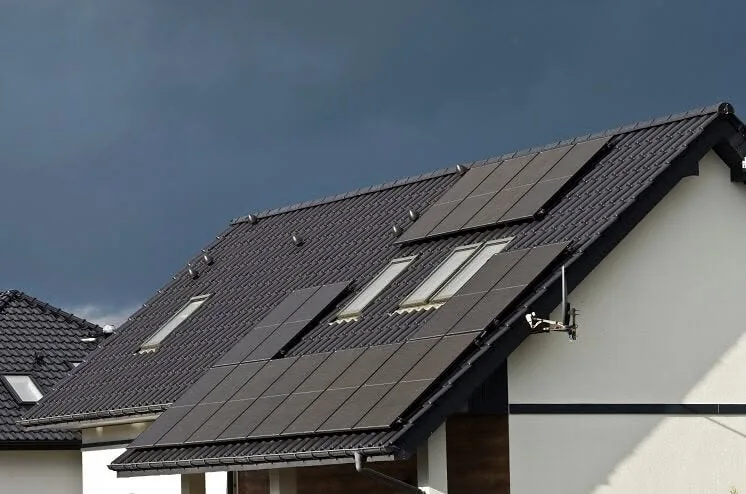
A design should fit the roof—not fight it
Usable roof area, shading, rooflights and safe access all shape the final layout.
A broader generation window can be useful
East-facing panels tend to contribute more in the morning and west-facing panels later in the day. Combining both roof planes can create a flatter production profile than a single south-facing array.
That pattern may suit homes with morning and evening loads, or businesses operating across the working day. Annual yield and self-consumption should be modelled rather than assumed.
Each roof plane still needs its own assessment
Pitch, shade, roof condition, usable area and the electrical configuration can differ from one side of the property to the other. Inverter and optimiser choices should follow the layout, not be selected first.
Compare usable value, not only peak output
A proposal should show estimated annual generation, the expected timing of production and the likely split between on-site use and export. The most valuable layout is not automatically the one with the highest midday peak.
Common questions
- Do east-west panels need two inverters?
- Not necessarily. Suitable inverter inputs or other design approaches can accommodate different orientations. The correct configuration depends on the array and equipment.
- Will an east-west roof produce less than a south-facing roof?
- The annual total can be lower for the same panel capacity, but the wider daily production window may improve on-site use. A property-specific model is the useful comparison.