
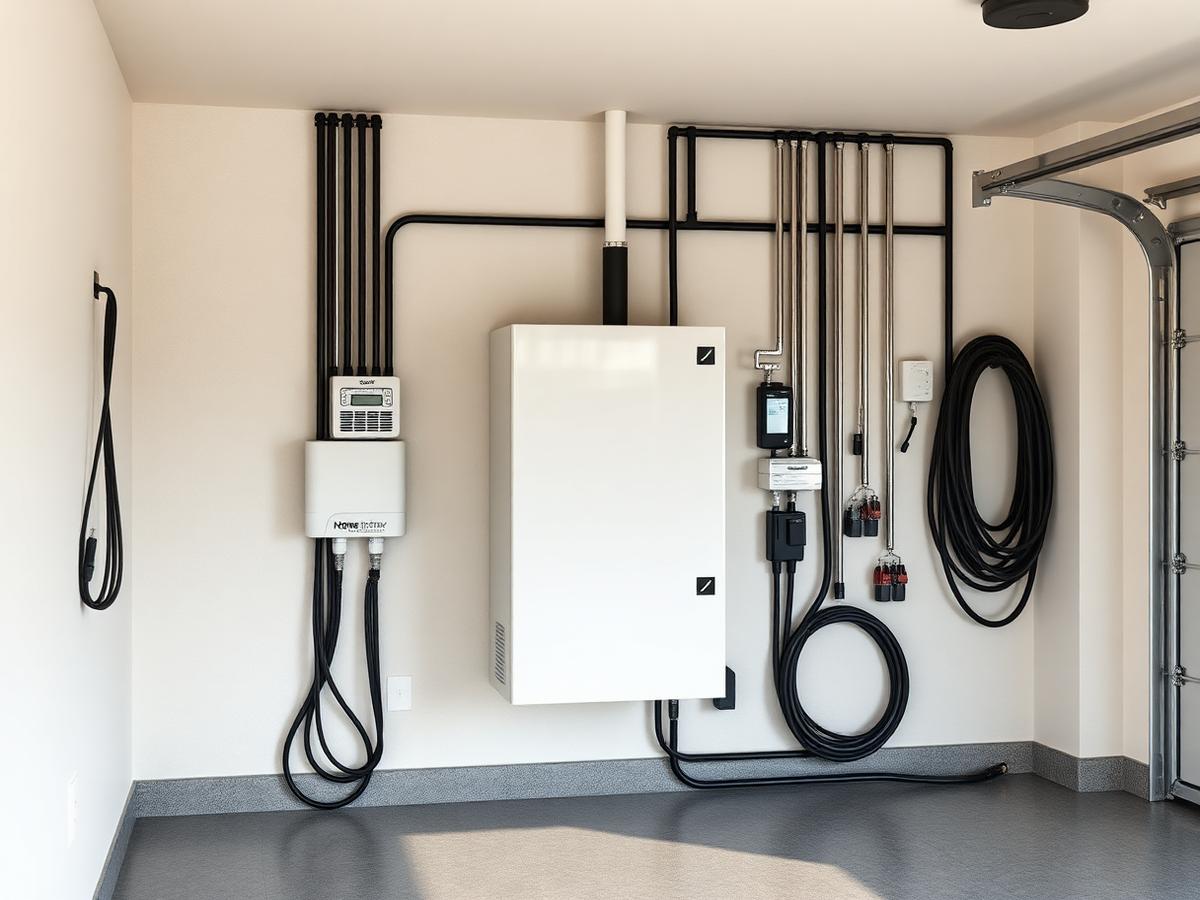
Storage planned as part of the whole home
Capacity, power, controls, clearances and cable routes are considered together.
What a home battery can do
With solar panels, a battery can store surplus daytime generation for use later. Without solar, compatible systems can charge from the grid during a lower-cost tariff period and discharge during a more expensive period. The financial result depends on tariff differences, usable capacity, efficiency and actual consumption.
A battery cannot capture energy that is not available, and oversizing may leave expensive capacity unused. Discharge power matters as well as energy capacity: it affects how much of the home's demand the battery can support at one time.
New systems and retrofits
When solar and storage are designed together, inverter, metering and control choices can be coordinated from the start. Existing arrays can often be retrofitted using an AC-coupled battery, although equipment compatibility, electrical protection, meter arrangement and available space must be assessed.
The battery location must meet manufacturer and electrical requirements. Temperature, access, cable routing, clearances and the route to the consumer unit can rule out an apparently convenient cupboard or external wall.
Backup power must be designed explicitly
A normal grid-connected battery does not necessarily power the home during an outage. Backup operation needs compatible equipment, safe changeover arrangements and an agreed set of supported circuits. Whole-home backup may require more power and capacity than essential-load backup.
Ask the proposal to distinguish usable capacity from advertised capacity, continuous power from peak power, and standard operation from outage backup. Monitoring and operating modes should be explained during handover.
Common questions
- Can a battery be added to old solar panels?
- Often, yes. The existing inverter, meters, protection, available space and intended operating mode need to be checked before selecting a retrofit configuration.
- Will a solar battery keep my house running in a power cut?
- Only when the design includes compatible backup equipment and suitable circuits. Backup is not an automatic feature of every grid-connected battery installation.