
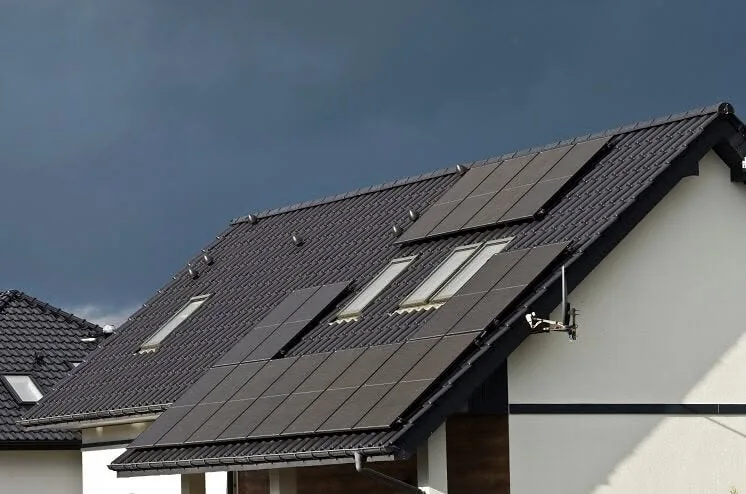
A design should fit the roof—not fight it
Usable roof area, shading, rooflights and safe access all shape the final layout.
Start with light, roof geometry and shade
Panel output depends on the solar resource at the property, the direction and pitch of each roof plane, and any shade from chimneys, trees or nearby buildings. A split east-west array may generate less at midday than a south-facing array while spreading production more usefully across the day.
Usable roof area matters as much as total roof size. Rooflights, hips, valleys, safe edge distances and access requirements can reduce the area available for a sensible panel layout.
Annual output is not evenly distributed
Generation is normally much higher through spring and summer than through the shortest winter days. A useful proposal shows an annual estimate and explains the seasonal pattern rather than suggesting one daily figure applies all year.
The estimate should also include reasonable losses for temperature, cabling, inverter conversion, mismatch and shading. Those assumptions make it possible to compare competing proposals on the same basis.
Value depends on where the electricity goes
Electricity used at the property can avoid grid imports; surplus may be exported under an eligible tariff. The financial value therefore depends on consumption timing, import price, export price and whether storage changes how much generation is used on site.
Common questions
- Do solar panels need direct sunshine?
- No. Solar PV generates from daylight, although output is lower when light levels are lower. The annual model should reflect local weather and seasonal variation.
- Is a south-facing roof essential?
- No. East-, west- and mixed-orientation roofs can be viable when the layout, shade and electricity-use pattern are assessed together.