
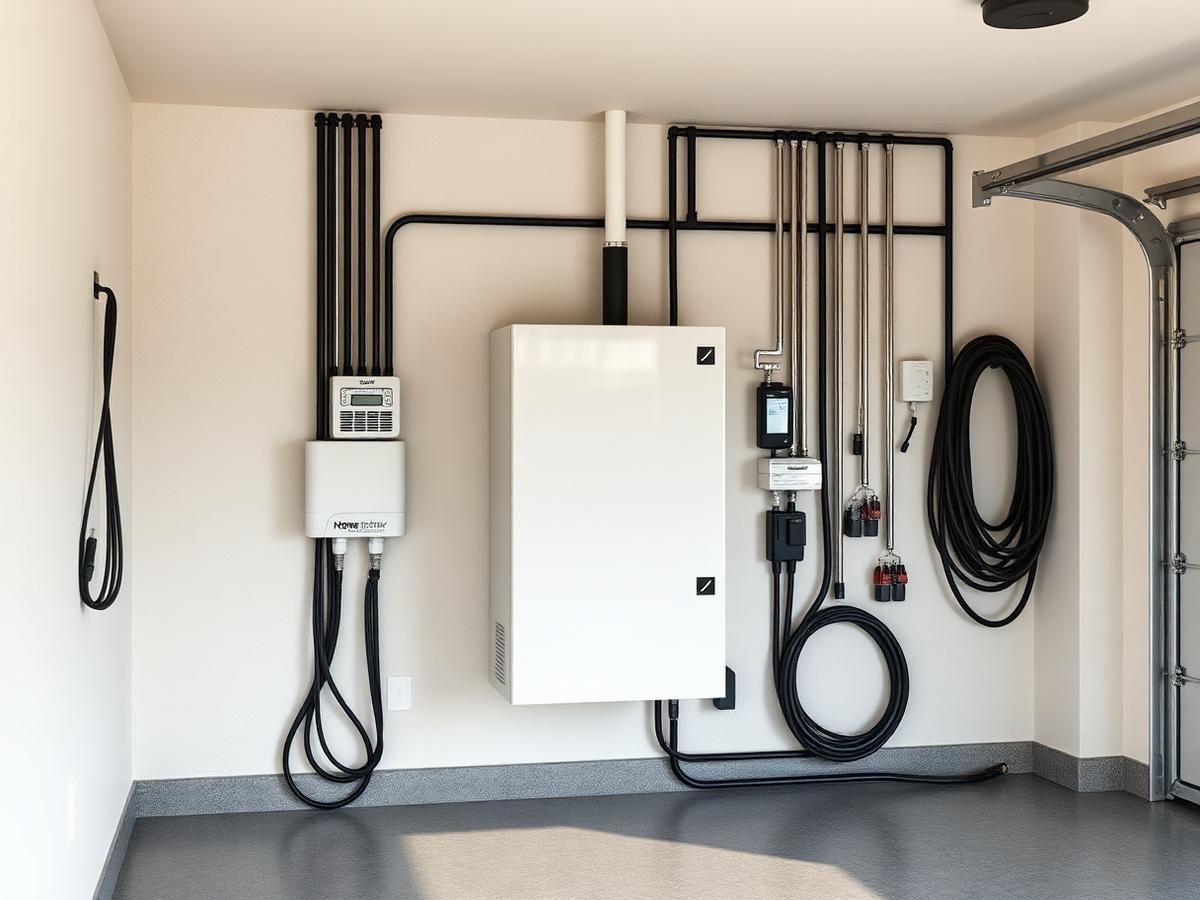
Storage planned as part of the whole home
Capacity, power, controls, clearances and cable routes are considered together.
The tariff creates the opportunity
A standalone battery can charge during a lower-cost tariff window and discharge during a higher-cost period. The useful saving depends on the price difference, usable capacity, charging power, round-trip efficiency and how much peak-period demand the home can shift.
Consumption data prevents guesswork
Half-hourly data is especially helpful because a total annual bill does not reveal when electricity is used. EVs, heat pumps and electric hot water can materially change the pattern and the required charge or discharge power.
The model should allow for standing charges, tariff rules and losses without treating a promotional rate as permanent.
Keep future solar options visible
If solar may be added later, equipment compatibility, metering, cable routes and installation space should be considered now. That can reduce avoidable replacement work when the wider system changes.
Common questions
- Will a standalone battery lower every home's bill?
- No. The result depends on the tariff, consumption timing, battery losses, equipment cost and how consistently the capacity is used.
- Can solar be added to a grid-charged battery later?
- Often, but compatibility and system architecture should be checked before the first installation if future solar is likely.