
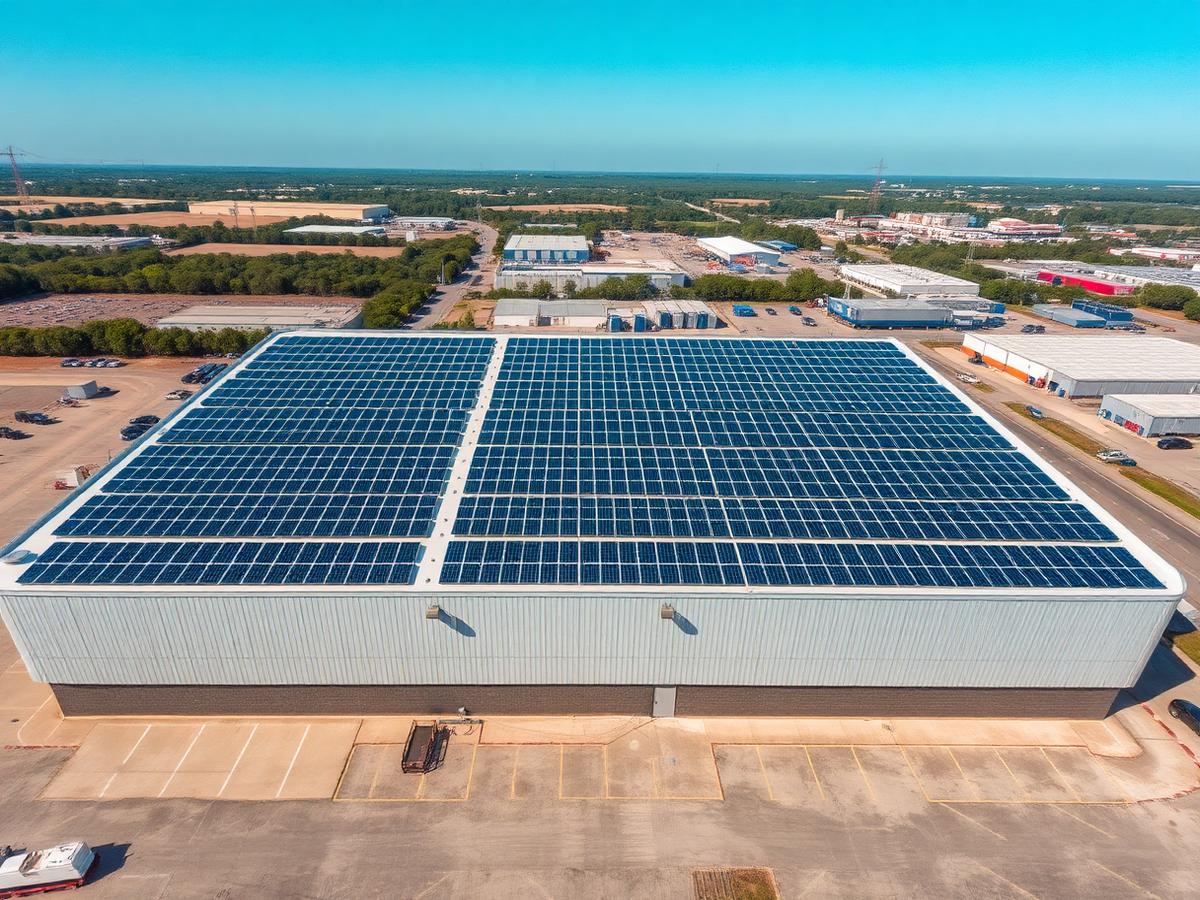
Start with the building and its demand
Roof condition, access, structure, daytime consumption and grid capacity drive feasibility.
The roof build-up comes first
The survey should identify roof type, age, membrane condition, insulation, drainage and any warranty constraints. A structural assessment may be required, particularly for larger ballasted arrays.
Penetrating and non-penetrating mounting approaches have different implications for weight, waterproofing and wind resistance.
Rows need spacing and edge zones
Tilted rows can shade one another if spacing is too tight. Wind loads are also greater around roof edges and corners, so usable area is not simply the full measured roof rectangle.
Access remains necessary after installation
Walkways, drainage points, rooflights, plant and fire-safety routes need to remain accessible. The design should consider how roof inspections and panel maintenance will be completed throughout the system life.
Common questions
- Do flat-roof panels have to be tilted?
- Mounting angle depends on the system, roof and objectives. Tilt can improve drainage and orientation but increases wind loading and row-shading considerations.
- Can a flat roof support ballasted solar panels?
- Only after the roof structure and mounting design have been assessed for the additional loads and site wind conditions.