
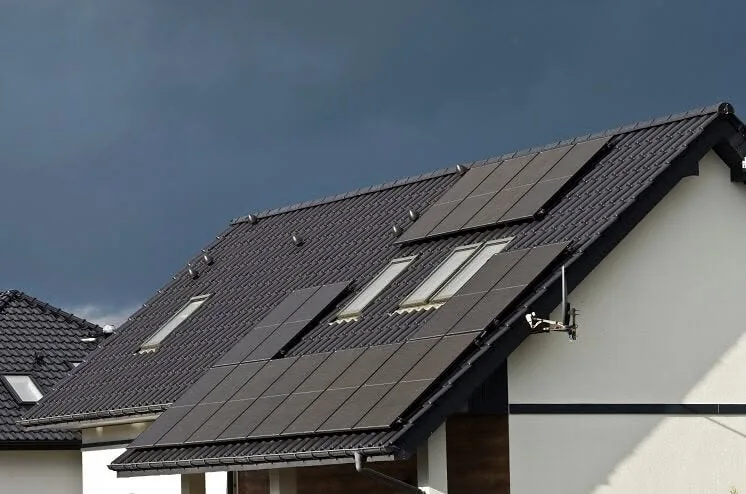
A design should fit the roof—not fight it
Usable roof area, shading, rooflights and safe access all shape the final layout.
On-roof systems suit many existing homes
Rails and roof-specific fixings support the array above tiles or slates. The approach is familiar, allows rear ventilation and usually avoids removing a large area of sound roof covering.
Fixings, flashing, cable routes and roof condition still need appropriate design and workmanship.
In-roof systems can integrate with roof work
Integrated systems can create a lower-profile appearance and may be attractive during a new build or planned reroof because panels replace part of the roof finish. Detailing, drainage, fire performance and access for future replacement need careful coordination.
Compare the complete roof scope
The decision should include roof labour and materials, scaffold, generation assumptions, ventilation, warranty interfaces and how a panel or roof component would be accessed later. Product price alone does not show the difference.
Common questions
- Is in-roof solar more efficient?
- Not necessarily. Panel temperature and ventilation can affect output. The specific product, layout and modelling matter more than appearance alone.
- Can in-roof solar be retrofitted?
- Yes in some projects, especially where reroofing is planned, but removing sound roof covering solely for integration may add cost and complexity.