
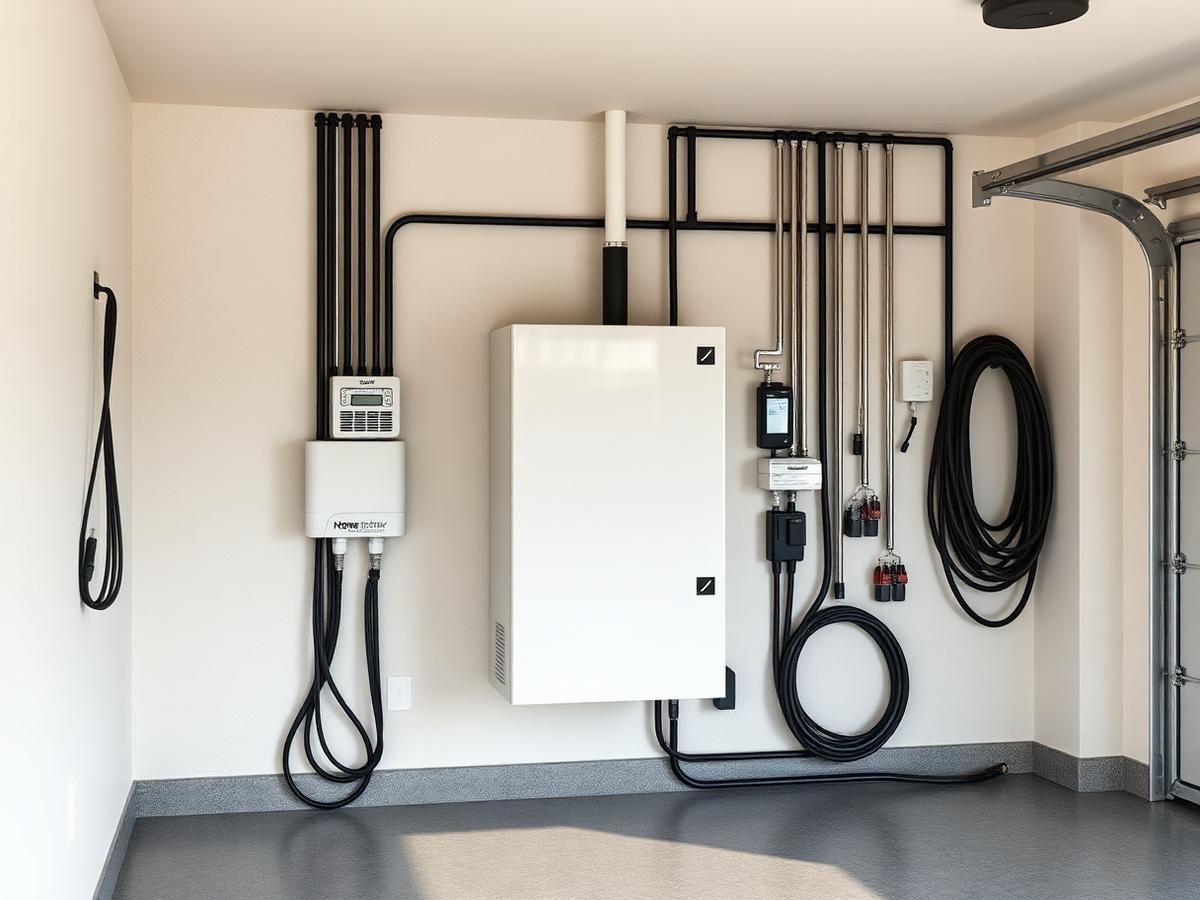
Storage planned as part of the whole home
Capacity, power, controls, clearances and cable routes are considered together.
Start with the energy that moves through the home
Historic consumption shows how much electricity the property uses, while interval data shows when it is used. Solar generation estimates then indicate how much surplus may be available to store through different seasons.
A battery that is rarely filled or emptied may leave expensive capacity unused. A unit that is too small may not capture the available surplus or off-peak charging opportunity.
Power and capacity answer different questions
Usable capacity describes how much energy can be stored. Continuous discharge power describes how much demand the battery can support at once. Kettles, ovens, EV charging and electric heating can create short or sustained loads that exceed a smaller battery's output.
Tariffs and backup change the design
Time-of-use charging depends on the available low-cost window and charging power. Backup operation needs compatible equipment, safe changeover arrangements and a clear list of essential circuits; it is not automatic with every battery.
Common questions
- Is a larger battery always better?
- No. Extra capacity only helps when the property can charge and use it often enough to justify the cost and losses.
- Should battery size match solar system size?
- They are related, but electricity use, timing, tariff strategy, battery power and future loads also need to be considered.