
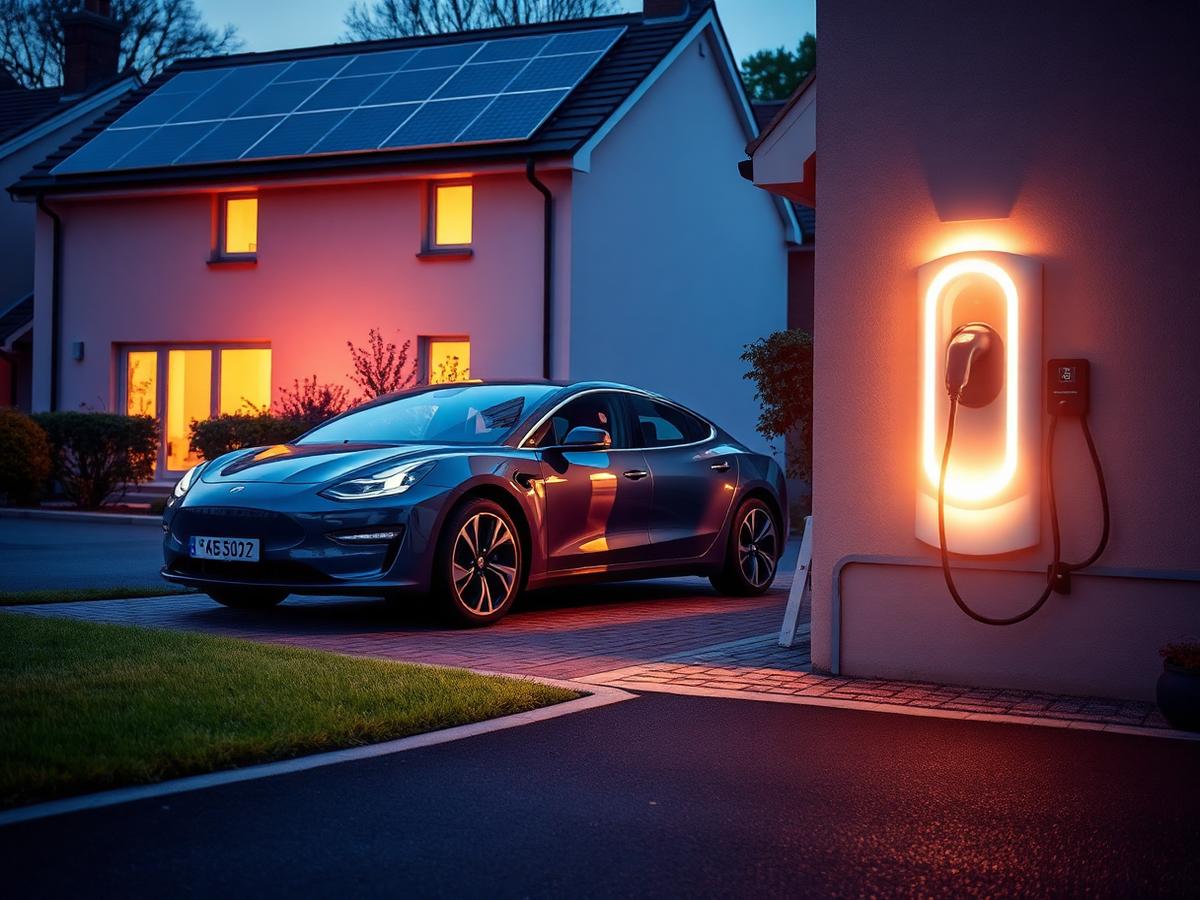
Charging that works with the home
Supply capacity, parking, tariffs, solar and battery controls all affect the right setup.
Solar surplus is variable
Cloud, shade and household demand make surplus change through the day. Solar-aware charging uses monitoring to adjust the vehicle's charging rate, while the charger and car still have minimum and maximum operating limits.
If the car is mainly away during daylight hours, scheduled off-peak charging may matter more than solar-only charging.
The whole electrical system sets the limit
Supply capacity, consumer-unit condition, cable route, earthing and other large loads must be checked. Dynamic load management can reduce charger output when the home is already using significant power.
Battery priorities should be deliberate
Where a home also has a battery, controls need a clear priority: charge the battery, charge the vehicle, export, or follow a tariff schedule. The best order depends on driving patterns and household goals.
Common questions
- Can an EV charge only from solar panels?
- Compatible systems can use a solar-surplus mode, but minimum charging rates and changing generation mean grid support or pauses may occur depending on settings and equipment.
- Do I need a battery for solar EV charging?
- No. A charger can respond directly to available surplus. A battery may help shift energy, but it also adds cost, losses and control decisions.