
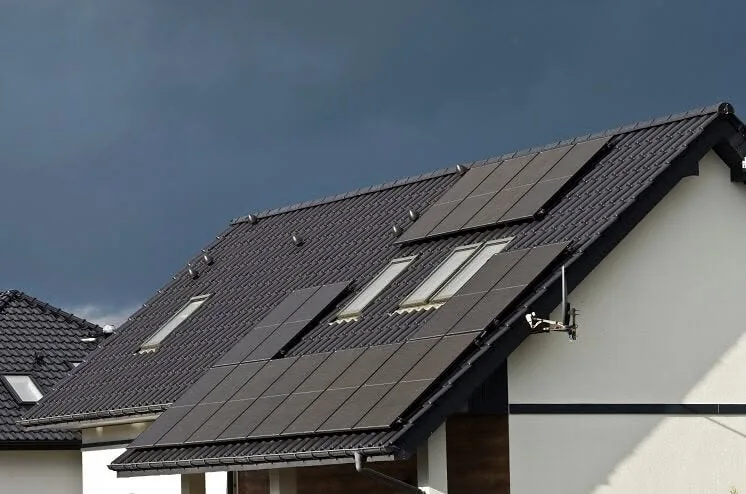
A design should fit the roof—not fight it
Usable roof area, shading, rooflights and safe access all shape the final layout.
The seasonal profiles are different
Heat-pump electricity use is commonly highest in colder, darker months, while solar generation is strongest through spring and summer. Solar can still contribute, but it should not be presented as covering winter heating demand in the same way as summer household use.
Daytime operation can improve self-use
Weather compensation, hot-water schedules and building thermal mass can sometimes shift some demand toward daylight hours without reducing comfort. The heat-pump designer should determine appropriate controls rather than forcing operation around solar at the expense of efficiency.
A battery may shift some solar or off-peak electricity, but capacity and power should be assessed against the larger heating load.
Coordinate electrical capacity and monitoring
Solar, battery, EV charging and a heat pump all affect the electrical design. Supply capacity, load management, metering and control priorities should be reviewed together before equipment is selected.
Common questions
- Will solar panels run a heat pump all winter?
- Usually not on their own. Winter solar generation is lower while heating demand is higher. The contribution should be modelled by month rather than as one annual percentage.
- Should solar be installed before a heat pump?
- Either order can work, but future heating demand and electrical capacity should be included in the solar and battery plan from the start.