
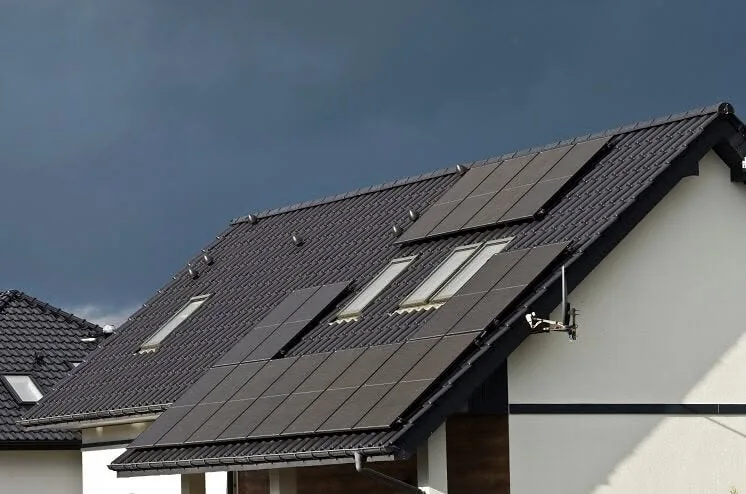
A design should fit the roof—not fight it
Usable roof area, shading, rooflights and safe access all shape the final layout.
Assessment and survey come before final design
The first conversation establishes postcode, roof, electricity use and objectives. The technical survey then checks roof condition, shade, access, electrical supply, equipment positions and cable routes.
Any required grid application or additional technical information should be identified before the installation is committed.
The written proposal becomes the scope
The proposal should show the layout, equipment, generation assumptions, included work, price and relevant exclusions. Changes discovered after survey should be recorded, not left as informal promises.
Once agreed, access and scaffold can be coordinated with roof and electrical work in a safe sequence.
Commissioning and handover finish the job
The installed system is tested and commissioned, monitoring is configured and the customer receives operating guidance and relevant documents. Keep certificates, warranties, grid correspondence and login details together for future support or export applications.
Common questions
- How long does a solar installation take?
- The roof and electrical work may be completed over a short programme, but total timescale depends on survey findings, access, equipment, weather and any grid approval required.
- Will the electricity be switched off?
- A planned interruption is normally needed for electrical connection and testing. The installer should explain timing and any preparation before work starts.