
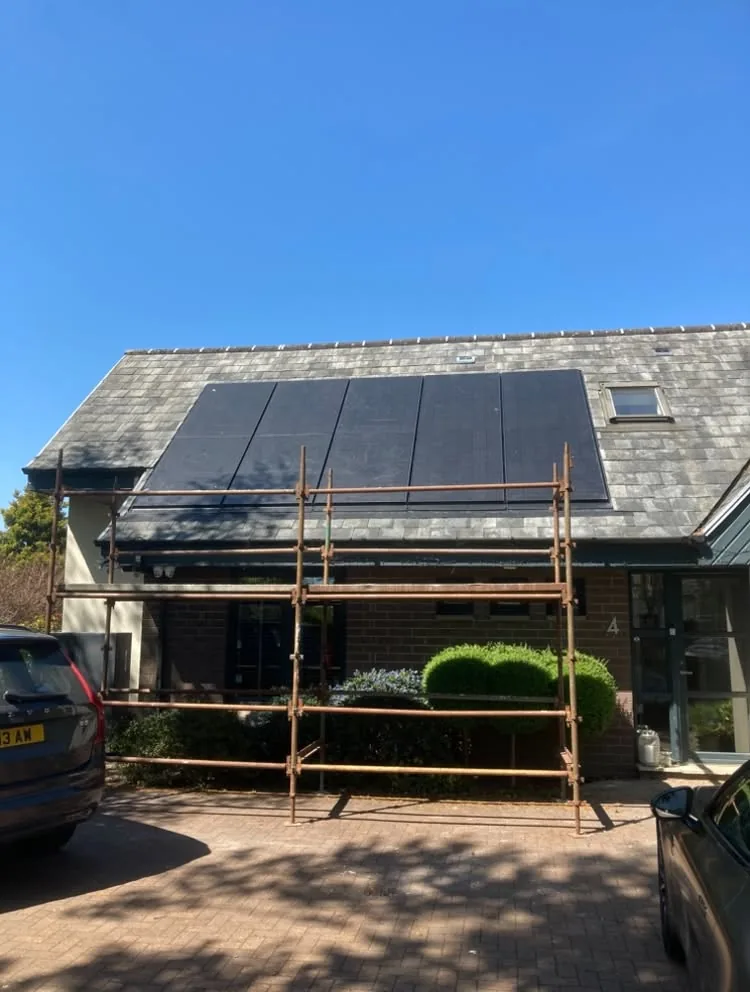
Inspect first, then recommend
Safe access, system records and evidence from the inverter help narrow down the fault.
Use monitoring as an early warning
Become familiar with the normal daily and seasonal pattern shown by the inverter or monitoring portal. A sudden step down, repeated errors or a long period with no generation is more useful diagnostic evidence than one cloudy day's output.
Keep login details, equipment models, commissioning records and the MCS certificate together. Screenshots and fault codes can help a technician prepare before visiting.
Cleaning is not automatically required
Rain often removes ordinary dust from pitched panels, while bird fouling, leaves or local pollution can create more persistent soiling. Cleaning should only be considered where there is evidence of a problem and safe access can be provided.
Do not climb onto the roof or use abrasive tools. Roof safety and manufacturer guidance take priority over a marginal output gain.
Diagnose before replacing parts
Underperformance can arise from monitoring faults, shading changes, inverter issues, string faults, isolation problems or physical damage. A written diagnostic scope helps avoid replacing equipment before the cause is established.
Common questions
- How often should solar panels be serviced?
- There is no single interval for every system. Follow manufacturer and installer guidance, monitor performance and arrange checks when faults, damage or abnormal output appear.
- Can FLO inspect a system installed by another company?
- Yes. Provide equipment details, available paperwork, monitoring screenshots and fault codes so the likely diagnostic scope can be assessed first.